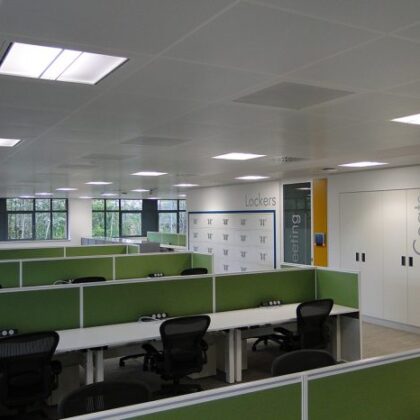
On any construction or fit-out project, the most challenging issues rarely come from the individual packages themselves. Instead, they arise at the interfaces. The points where trades meet, overlap, and rely on each other to deliver a coordinated result. For joinery packages in particular, these interfaces are where small misalignments can quickly turn into costly delays, rework, and programme disruption.
When managing complex projects, understanding where these clashes typically occur and how to prevent them is essential to maintaining quality, programme certainty, and commercial control.
Why Interfaces Matter More Than Ever
Modern construction projects are increasingly complex. Multiple trades are working in parallel, timelines are compressed, and design information evolves throughout the build. Joinery is often one of the final elements to be installed, meaning it must align precisely with everything that comes before it, from structure and services to finishes and tolerances.
When different teams don’t talk to each other and coordinate properly, it’s easy to see what happens: things just don’t line up as planned. People on-site end up making quick fixes, which can mean the finished product isn’t as good as it should be. Everyone feels the pressure as the project slows down, costs start piling up, and deadlines get even tighter.
Common Interface Clashes in Joinery Packages
- Structural Openings vs Joinery Dimensions
One of the most frequent issues is a mismatch between the as-built structure and the joinery design. Even small deviations in wall openings, floor levels, or ceiling heights can prevent joinery from fitting as intended.
Without accurate coordination, site teams may be forced to adjust components on-site. This can undermine both finish quality and installation efficiency.
- MEP (Mechanical, Electrical, Plumbing) Conflicts
Joinery often needs to accommodate services such as lighting, HVAC grilles, access panels, and power outlets. When these elements are not fully coordinated at the design stage, clashes are much more likely to occur.
For example, a cabinet may arrive on-site only to find that a service runs directly through its intended fixing point. Resolving this on-site can lead to redesign, delays, or compromised functionality.
- Finishes and Tolerances
Joinery interfaces directly with multiple finished surfaces such as flooring, wall finishes, ceilings, and glazing. Differences in tolerances between trades can create visible gaps, misalignments, or uneven finishes.
This is particularly critical in high-end residential, commercial, and office environments, where expectations around finish quality are high.
- Sequencing and Programme Pressures
Even when designs are correct, poor sequencing can create interface problems. If preceding trades are delayed or incomplete, joinery installation may be rushed or forced into suboptimal conditions.
This often results in damage, rework, or installation that doesn’t meet the original design intent.
- Incomplete or Evolving Design Information
Interface clashes are frequently rooted in incomplete or late-stage design changes. When joinery is designed based on outdated or partially developed information, the risk of misalignment increases significantly.
This is especially common where coordination between design teams and site teams is limited.
How to Prevent Interface Clashes
Interface clashes are common, but they can often be avoided through:
- Early coordination
- Clear communication throughout the project
- Precise execution at the finish
Effective management begins at the design stage, where detailed and coordinated drawings, especially those developed using CAD, help visualise how joinery integrates with other trades and services, identifying potential conflicts before work begins. Regular coordination between joinery manufacturers, main contractors, and other trades ensures responsibilities are clearly understood, reducing confusion and helping to resolve issues before they escalate. Timely responses and clarity during tender and design phases further help minimise confusion as the project progresses.
Relying solely on design drawings is rarely sufficient. Ongoing site surveys and accurate measurements help ensure joinery is manufactured to suit actual site conditions, which is particularly vital for refurbishment projects or where tolerances are tight. Close collaboration between design and manufacturing teams allows discrepancies to be caught early, supporting a “Right First Time” outcome and maintaining programme certainty. Even with thorough planning, unexpected challenges can arise on-site, but a responsive approach, backed by technical expertise and flexible production processes, can enable teams to adapt quickly and keep the project on track without compromising quality.
The Value of Getting Interfaces Right
When joinery interfaces are properly managed, the benefits extend across the entire project:
- Reduced rework and site delays
- Improved installation efficiency
- Higher quality finishes
- Greater commercial certainty
- Stronger collaboration between trades
For project managers, quantity surveyors, and contractors, this translates into smoother delivery, fewer risks, and better outcomes for clients.
Joinery may be one package among many, but it sits at the intersection of multiple trades. That makes it uniquely exposed to interface risks and uniquely capable of elevating a project when those interfaces are handled well.
By focusing on coordination, communication, and precision from the outset, projects can move from reactive problem-solving to proactive delivery, ensuring that every element fits as it should, the first time.
Chilfen Joinery—Your Trusted Partner for Project Success.
Follow Us on LinkedIn
Stay updated with the latest news, insights, and project highlights by following Chilfen Joinery on LinkedIn